
Gender Dynamics in Politics
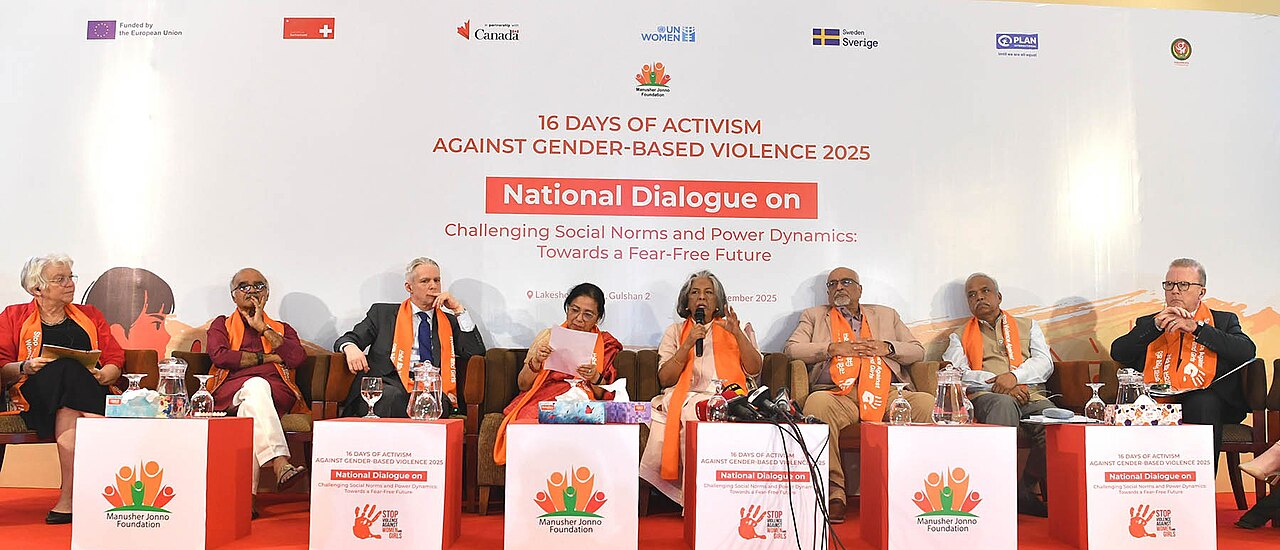
A woman at the top of a room that was built by men who still can't find the thermostat.

Press Information Department · Public domain
Gender Dynamics in Politics is one of the most persistent and sharp-edged satirical threads running through all seven seasons of Veep. At its center is Selina Meyer, a woman who has clawed her way to the top of a system that was never designed to accommodate her, and the show relentlessly exposes the micro-aggressions, double standards, and structural blind spots that male colleagues, journalists, and the public impose on her every single day. The theme is never a standalone plotline; it's the atmosphere. It lives in the way a male senator talks over Selina in a briefing, in the way the press asks her about her family while asking her male counterparts about their policy, in the way her own staff oscillates between genuine respect and bewildered condescension. Veep treats gender politics not as a subplot to be resolved but as the weather everyone is stuck in, and that structural choice is what makes it cut so deep.
- Lead character
- Selina Meyer — Former Vice President / Acting President / Presidential candidate
- Creator
- Armando Iannucci
- Network
- Showtime
- Seasons
- 7 (2012–2019)
- Episodes
- 70 (10 per season)
- Lead actress
- Julia Louis-Dreyfus (multiple Emmy Awards for the role)
Lore & Background
In the world of Veep, the political establishment is a machine of male egos, backroom handshakes, and an unspoken assumption that leadership is a masculine default. Selina Meyer does not shatter the glass ceiling so much as she is handed a glass ceiling and told to make it look good. Her competence is acknowledged in the same breath it's undermined; her authority is granted and then quietly revoked by colleagues who simply forget she's the one in charge. The show paints a world where a woman can be the most powerful person in the room and still be the one asked to fetch the coffee, to soften her tone, to smile through the briefing. The satire extends beyond Selina to the ecosystem around her. Journalists like Amy Brookheimer navigate their own gendered expectations in the press corps. Male aides range from genuinely supportive to obliviously patronizing, and the show finds comedy in the gap between what they think is helpful and what it actually is. The White House, the Senate floor, the campaign trail — every setting becomes a stage where the old script of 'man leads, woman assists' is performed, and Veep's camera lingers just long enough to make the audience uncomfortable. Crucially, the show never lets Selina win a clean victory over these dynamics. She pushes back, she dominates, she outmaneuvers — and then the next scene resets. The system absorbs her brilliance and reasserts its assumptions. This refusal to offer catharsis is the show's sharpest satirical tool: it says the problem isn't one bad senator or one sexist headline. It's the architecture.
In Their Own Story
The fluorescent lights in the West Wing briefing room hum at a frequency that Selina has come to associate with the particular silence that falls when a male colleague has decided she's said something wrong. She's mid-sentence, laying out the infrastructure plan for the third time, when the Senator from Ohio leans forward, taps his pen twice, and says 'But what about the, uh, the family angle?' She stares at him. He stares back, genuinely confused, as though the concept of a policy without a child attached to it is a foreign language. Gary, behind her, makes a small 'uh-oh' noise with his mouth. Selina turns back to the Senator, smiles the smile she's perfected over two decades in this building — the one that says *I will destroy your re-election bid with a single eyebrow raise* — and says, 'Senator, the family angle is that the family is going to be paying for this road.' The room exhales. Someone in the back row laughs. The Senator writes something down. Selina does not know what. She will never know what. And tomorrow, in a different briefing room, a different man will ask about the family angle again.
Reader's Guide
The theme is **Gender Dynamics in Politics**, and it's the show's quiet engine even when it's not the headline joke. The most consistent running gag is the 'talk-over' moment: a male senator, aide, or journalist will interrupt Selina mid-policy, rephrase her point in a way that makes her sound less sharp, and then look at the room as if he's just clarified something. The comedy isn't that he's evil. It's that he's *genuine*. He thinks he's being helpful. The camera doesn't cut away. You sit in the silence with Selina while she decides whether to correct him or let it slide, and the answer is always 'let it slide,' because correcting him costs more political capital than staying silent. That's the real satire: the tax on women's time and energy in a room full of men who don't realize they're spending it. Then there's the media double standard, played out in the press-corps scenes. Male politicians get asked about their strategy. Selina gets asked about her tone, her appearance, whether she's 'handling the pressure' like a woman. The show never makes the journalist a villain; they're just following the script they were handed. That's worse, and the show knows it. The structural genius is the one-day-per-episode format. There's no arc where Selina 'overcomes' the sexism by Friday. Each day resets. The next man, the next question, the next micro-insult. The show is saying: this isn't a problem you solve. It's a condition you live in. And the audience, laughing at the absurdity, is also being asked to notice how normal the absurdity feels. That's the punchline that doesn't land because it's already true.
Did You Know?
- Julia Louis-Dreyfus won the Emmy for Outstanding Lead Actress in a Comedy Series four consecutive years (2012–2015) for Selina Meyer, making her one of the most decorated comedy leads in the award's history.
- The show's one-day-per-episode structure means that gender-based micro-aggressions Selina endures are never 'resolved' within an episode — they simply recur the next day, mirroring how these dynamics operate in real poli
- Selina's interactions with her male staff, particularly Chief of Staff Gary Walsh, oscillate between mutual respect and patronizing condescension within the same scene, a deliberate writing choice that avoids making any
Gallery
Frequently Asked Questions
How does Veep handle gender dynamics in politics across its seven seasons?
Rather than isolating sexism to a single plotline, the show treats it as ambient background noise that colors nearly every interaction Selina Meyer has. Male colleagues interrupt her in briefings, journalists frame her competence as surprising, and aides treat her authority as a temporary anomaly, all delivered with the same deadpan absurdity as the political chaos around them.
Does Selina Meyer actually face sexism in Veep or is it just played for laughs?
Both, and that duality is the show's sharpest tool. The micro-aggressions—being talked over, having her decisions second-guessed in ways her male predecessors never faced—are never set apart as 'serious' moments, which makes them land harder because the comedy refuses to grant them special gravity.
Which Veep character best represents the male establishment's attitude toward Selina?
No single antagonist owns the theme; the show deliberately distributes the pattern across senators, aides, journalists, and even members of her own staff. The satire targets the room itself—the collective assumption that a woman in the Oval Office is a temporary inconvenience—rather than one cartoonish bigot.
How does Veep's gender satire differ from other political comedies?
Where other shows might assign sexism to a one-season villain or a single 'bigot of the week' arc, Veep treats it as structural and ongoing across all 70 episodes. The comedy comes from the sheer accumulation of small, daily slights rather than from one grand confrontation, mirroring how the real experience often feels.
Does Veep ever let Selina succeed purely on her own terms, or is the cost always present?
Her competence is never in question, and she wins arguments and holds power firmly, but the show consistently shows those victories as harder-won and more isolating than they would be for a man. That quiet asymmetry—she's brilliant, but the room still bends around her in ways it never would otherwise—is the show's central argument about the price of being the woman at the top.
More in Themes & Satire
Elsewhere in the Veep universe
Spotted an error? Know more?
This is a living reference — every entry is fact-audited, and reader corrections feed straight into our audit queue. Suggest an edit · See this site's audit record